
A study by Zaline M. Roy-Campbell and Martha A. S. Qorro on students’ reading competence in English at secondary school level in Tanzania. From the mid-1970s there has been general dissatisfaction with the educational standards of school leavers at all levels of education in Tanzania. There has also been concern that levels of English language proficiency have been falling. A number of important studies on language in education have suggested a relationship between the two problems: because students do not understand English, the medium of instruction, they cannot understand subjects taught through this medium. The situation in Tanzania is one where the government directs that English shall be the medium of instruction while admitting that students do not understand it; where teachers teach in Kiswahili to enable comprehension; but where policy requires examinations in English. This is the language crisis the authors describe.
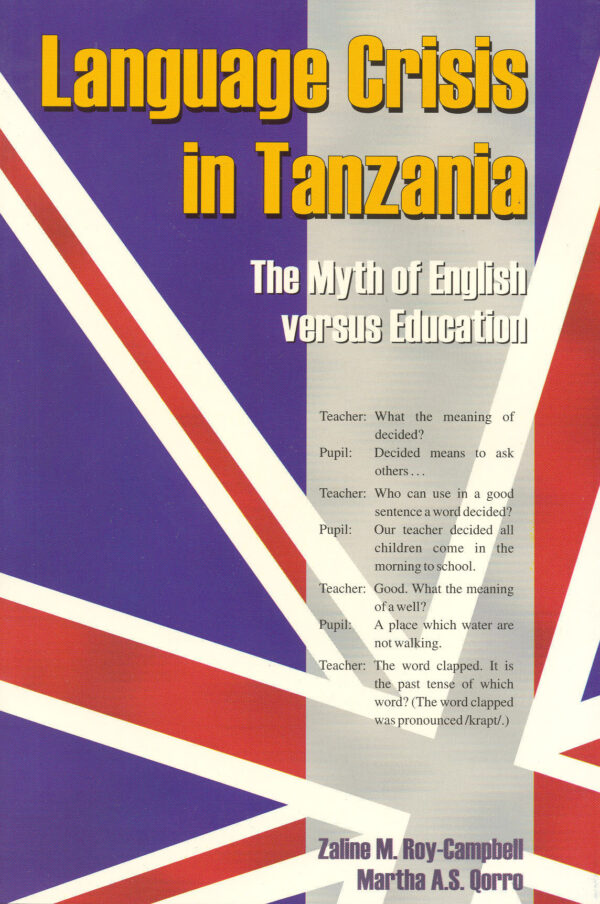
Language Crisis in Tanzania
Author(s): education policy, English, Kiswahili, language of instruction, Martha A. S. Qorro, secondary education, Tanzania, Zaline M. Roy-Campbell
Sh 12,000
Zaline M. Roy-Campbell and Martha A. S. Qorro’s study of the language of instruction crisis in Tanzanian secondary schools, where government policy mandates English instruction but teachers teach in Kiswahili to ensure comprehension, while examinations remain in English. A foundational text for debates on African language education policy.
Reviews
There are no reviews yet.